
Lima Cultural Heritage
There are cities where history is preserved in museums, and then there are cities where history lives in the streets. Lima cultural heritage is one of those places. Colonial balconies overlook busy avenues, ancient ruins sit quietly between modern buildings, and the Pacific coastline frames a capital shaped by centuries of cultural exchange.
This guide is written for travellers who want to experience Peru beyond postcards. It focuses on heritage, everyday life, architecture, cuisine, and the stories that make Lima more than just a gateway to Machu Picchu.
Why Lima Cultural Heritage Feels Distinct
Lima is not just Peru’s capital as it is a layered city where Indigenous traditions, Spanish colonial influence, African heritage, and modern creativity intersect.
What makes Lima Cultural Heritage special is contrast. Pre-Columbian sites stand near grand cathedrals. Traditional markets operate alongside contemporary art galleries. The city feels lived-in rather than staged, offering culture that unfolds naturally.
Understanding Lima’s Historical Foundations
Founded in 1535 by Spanish conquistador Francisco Pizarro, Lima quickly became one of South America’s most important colonial cities. Its historic core remains one of the most architecturally significant in the region.
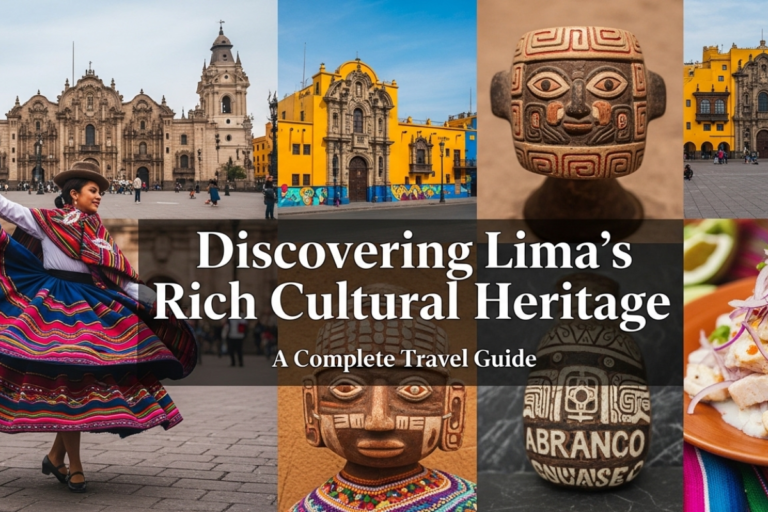
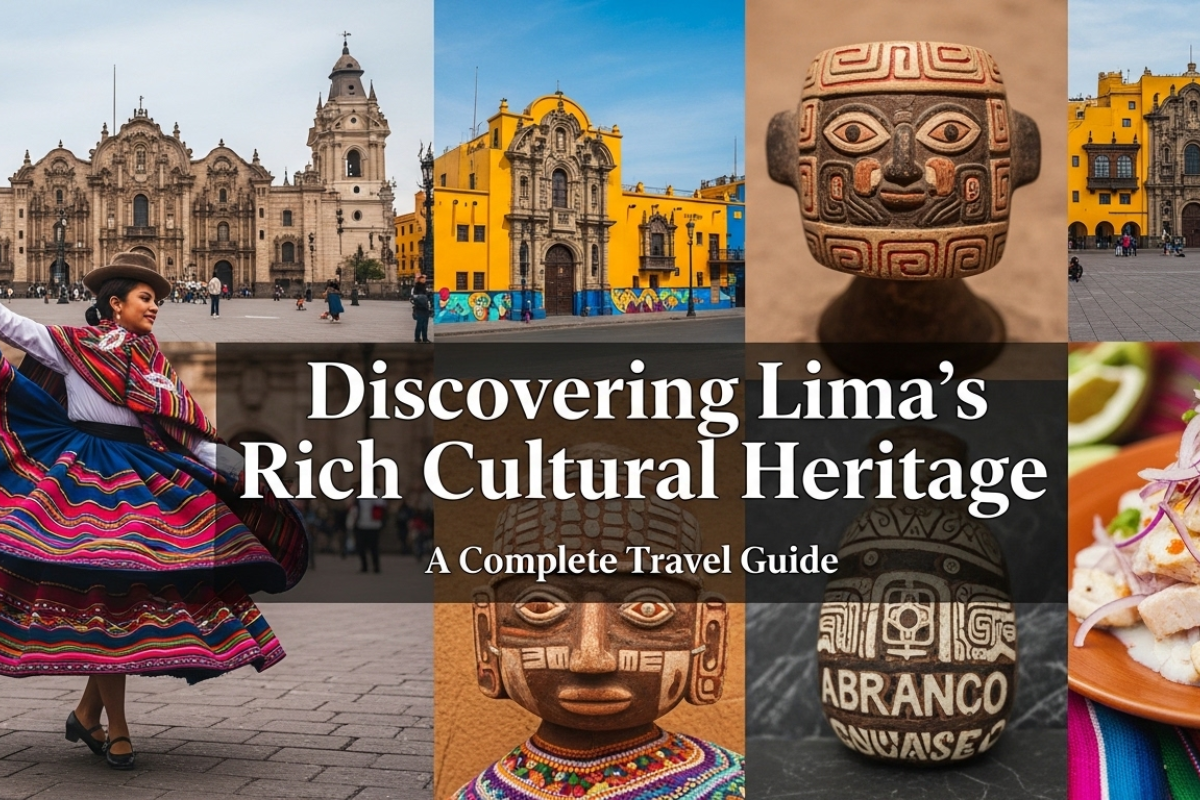
Walking through the Historic Centre of Lima reveals ornate churches, wide plazas, and carved wooden balconies that reflect centuries of influence. This area is recognized as a UNESCO World Heritage Site, preserving the city’s colonial character while remaining active and vibrant.
The Historic Centre: Where the Past Still Breathes
At the heart of Lima’s old town stands Plaza Mayor, the city’s founding square. Surrounding it are key landmarks like the Government Palace and the Cathedral of Lima.
The streets around the plaza reveal Lima’s architectural rhythm—arched corridors, detailed façades, and houses with enclosed balconies once designed for privacy and protection from the sun.
Exploring this area slowly allows visitors to appreciate how Lima Cultural Heritage evolved as a political, religious, and cultural center.
Ancient Roots at Huaca Pucllana
Long before Spanish rule, ancient civilizations thrived in this region. Huaca Pucllana is a pre-Columbian pyramid built by the Lima culture around 500 AD.
Located in the modern district of Miraflores, this adobe complex offers insight into early urban organization, ceremonial life, and agricultural systems.
Seeing Huaca Pucllana surrounded by contemporary buildings highlights Lima’s unique layering of time—ancient and modern coexisting in one landscape.
Peruvian Culture in Lima’s Daily Life
Culture in Lima is not confined to monuments. It is present in markets, festivals, music, and food.
Traditional markets offer fresh produce, local herbs, seafood, and handmade goods. Street vendors and family-run eateries reflect culinary traditions passed through generations.
In Lima, culture is shared through conversation, hospitality, and food rituals that bring people together.
The Influence of Food on Lima’s Identity
Lima cultural heritage is widely recognized as one of Latin America’s culinary capitals. Peruvian cuisine blends Indigenous ingredients with Spanish, African, Chinese, and Japanese techniques.
Dishes like ceviche, lomo saltado, and causa reflect this fusion. Dining in Lima is not simply about eating as it is about understanding migration, adaptation, and creativity.
Food tells the story of Peru’s diverse population, making it an essential part of any Lima cultural guide.
Coastal Views and Contemporary Life in Miraflores
The district of Miraflores offers a modern contrast to the historic centre. Clifftop parks overlook the Pacific Ocean, and walking paths connect scenic viewpoints.
This area blends shopping areas, cafés, and green spaces with archaeological heritage like Huaca Pucllana.
Miraflores demonstrates how Lima balances preservation with progress.
Barranco: Lima’s Artistic Soul
If the historic centre reflects colonial influence, Barranco represents Lima’s creative spirit.
Known for colorful streets, murals, galleries, and live music venues, Barranco attracts artists and writers. Its bohemian atmosphere adds depth to Lima’s cultural landscape.
Spending time here reveals how tradition and innovation coexist in everyday life.
Museums That Deepen Cultural Understanding
Lima’s museums provide structured insight into Peru’s history. Institutions such as the Larco Museum display pre-Columbian artifacts, textiles, and ceramics that predate colonial times.
These collections help visitors understand the Lima cultural heritage & civilizations that shaped Peru long before European arrival.
Museums complement street exploration by offering historical context and continuity.
Lima Travel Guide: Blending Past and Present
As part of a broader Peru travel guide approach, Lima serves as both introduction and anchor.
It prepares travellers for experiences across the Andes, the Amazon, and coastal regions by providing cultural and historical grounding.
Rather than rushing through the capital, spending several days in Lima adds depth to any Peru itinerary.
Common Mistakes First-Time Visitors Make
One common mistake is treating Lima cultural heritage as a brief stopover. The city rewards patience and curiosity.
Another is focusing only on food or only on historic sites. Lima’s strength lies in balance—architecture, archaeology, neighborhoods, and everyday life together form the full picture.
Who Lima Is Best For
Lima cultural heritage appeals to travellers who value cultural immersion over fast-paced sightseeing.
It suits history enthusiasts, architecture admirers, food lovers, and anyone interested in understanding how cities evolve across centuries.
Because the city offers varied districts and experiences, Lima adapts easily to different travel styles.
Experience Lima With Intention
To explore Lima cultural heritage meaningfully, consider these ideas:
- Stay in a central district
It allows easy movement between historic and modern areas. - Explore neighborhoods on foot
Walking reveals architectural details and daily life. - Balance museums with street exploration
Context enhances appreciation. - Engage with local cuisine
Food is cultural storytelling. - Allow time for reflection
Lima’s depth reveals itself gradually.
A thoughtful approach transforms a city visit into cultural understanding.
Conclusion
Lima is a city where centuries overlap gracefully with ancient pyramids, colonial cathedrals, vibrant neighborhoods, and coastal landscapes exist side by side with Expedia travel. Exploring its streets offers insight into Peru’s complex identity, shaped by resilience, exchange, and creativity.
Discovering Lima’s rich cultural heritage is not about checking landmarks off a list. It is about experiencing a capital where history lives openly and daily life carries tradition forward.
If you love travel stories that go beyond the surface, explore more curated destination guides at travelofferzone and start planning your next meaningful journey today.
About the Author